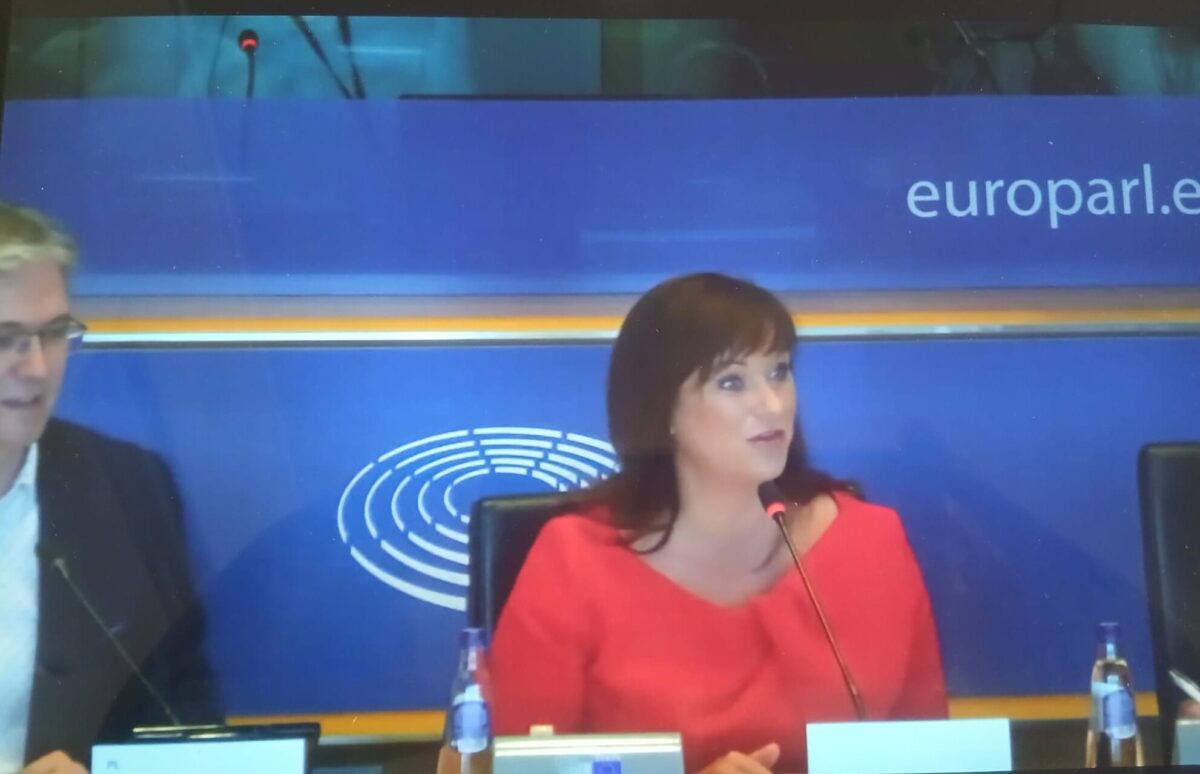
Bruxelles (eu24news) – On Wednesday 16 July, Sophie Løhde, Danish Minister for Interior and Health, presented in SANT committee the Danish Presidency priorities for Health. Denmark holds the rotating presidency of the Council of the EU until the end of 2025.
Minister Løhde began her speech by thanking the European Parliament for establishing the SANT Commission which according to her “contributes to European Union policies on healthcare, pharmaceutical regulation, and public health, which are essential for European competitiveness, our security, and the well-being of our citizens.” She emphasized that “we will cooperate and together take all necessary decisions to protect European interests.”
“Denmark,” Løhde stated, “is assuming the presidency at a time of rapid geopolitical change and growing uncertainty. The European Union is under global pressure, our economy is struggling, and our security is at risk. This is the political reality in Europe today, and this situation has a direct impact on our healthcare systems, threatens our security of supply, creates shortages of medicines, threatens access to new treatments, and threatens our ability to provide citizens with the best healthcare.”
“For these reasons” – the Danish minister emphasized – “we have chosen preparedness and life sciences as the themes of the Danish Presidency of the Council.”
Preparedness. “The Presidency wants our healthcare systems to be more robust and better prepared to counter both natural and man-made disasters: improved regional cooperation, antimicrobial resistance, and efficient medical countermeasures will be key elements of our work. Better coordination among Member States and an efficient approach to storage and stockpiling will be the starting point for discussions in the Council. We must ensure the continued availability of critical medicines and drugs in the Union; we cannot accept that patients cannot access the medicines they need—medicines and drugs that, for some, make the difference between life and death.”
Life sciences. “This is another central theme of this Presidency: access to medicines and quality healthcare. We must spread the benefits of a strong scientific sector in the European Union evenly throughout the Union with a patient-focused approach. New technologies must be deployed very quickly in healthcare sectors across Europe to ease the pressure on our healthcare systems.”
Furthermore, Løhde stated “the Pharma package is essential for ensuring the quality and safety of medicines in Europe. The trilogue began on June 17 and an agreement was reached on the urgency of this legislation. The aim is to ensure equal and timely access for all to safe and affordable medicines.”
Tomislav Sokol MEP (EPP Group) highlighted “we are addressing an important issue at such a critical and transformative time, as we are witnessing an increasingly complex geopolitical situation. We need to further strengthen the industry and our competitiveness. The pharmaceutical industry will be among the most important industrial sectors in the European Union, as already stated in the Draghi report”. Regarding the Critical Medical Act (CMA) he said, “the rules on stockpiling are, in my opinion, rather weak; it is important that medicines are adequately stocked to reach citizens in the event of shortages”. The issue of the storage of medicines was a key topic during the question time with Minister Løhde. Also, Ondrej DOSTAL MEP (Non-attached Members) referred to the high costs of the medicine’s storage, as well as the cost of disposing of expired medicines, would like it to be clarified whether these costs are borne by the Member State, the European Union, or the suppliers. On behalf of the Group of the Greens, Ignazio MARINO MEP, said that a key issue is just “the availability of critical medicines and devices in the medical field” and he asked to the Danish minister what measures the Presidency plans to incentivize/improve the stockpiling of medicines.
On behalf of the S&D Group, Vytenis ANDRIUKAITIS MEP, said “given that the Presidency refers to life sciences as a sector that can promote growth and resilience in Europe, Member States alone cannot do it”. Then he asked, “what measures should be promoted to create an ecosystem for innovation and research that can lead to an adequate policy to regulate medicine shortages and overcome fragmentation between Member States.”
According to Ondrej KNOTEK MEP (Patriots for Europe Group) the CMA will be a key tool, but the funding is currently insufficient, especially for the Youth4Health chapter, where only a few billion are available. The MEP asked the Danish Presidency whether it intends to direct funds toward this cause. Stine BOSSE MEP (Renew Europe Group) referred to the issue of antimicrobial resistance, and in particular, rare diseases, emphasizing that the national approach is insufficient and therefore whether the Presidency is considering encouraging the European Commission to accelerate the development of a strategy for rare diseases.
Minister Løhde concluded her speech by emphasizing that the Presidency “is committed to developing a balanced approach that can guarantee the supply of medicines and also improve access across borders. Strengthening cooperation between the Commission and Parliament, to ensure that the patient’s perspective is central and essential in this regard. “Secure supply and stockpiles of medicines is a key priority of the Presidency” she said, “the necessary funds will be included in the next financial planning”, clearly referring to the presentation today of the Commission’s proposal on the MFF. Finally, she briefly spoked about Ukraine, which “is preparing for accession to the European Union. Ukraine needs support, considering all the issues related to the war, such as mental health and antimicrobial resistance. A coordinated approach in terms of engagement with Ukraine is a key element of our Presidency.”
Scopri di più da Eu24news
Abbonati per ricevere gli ultimi articoli inviati alla tua e-mail.